
- calendar_today August 7, 2025
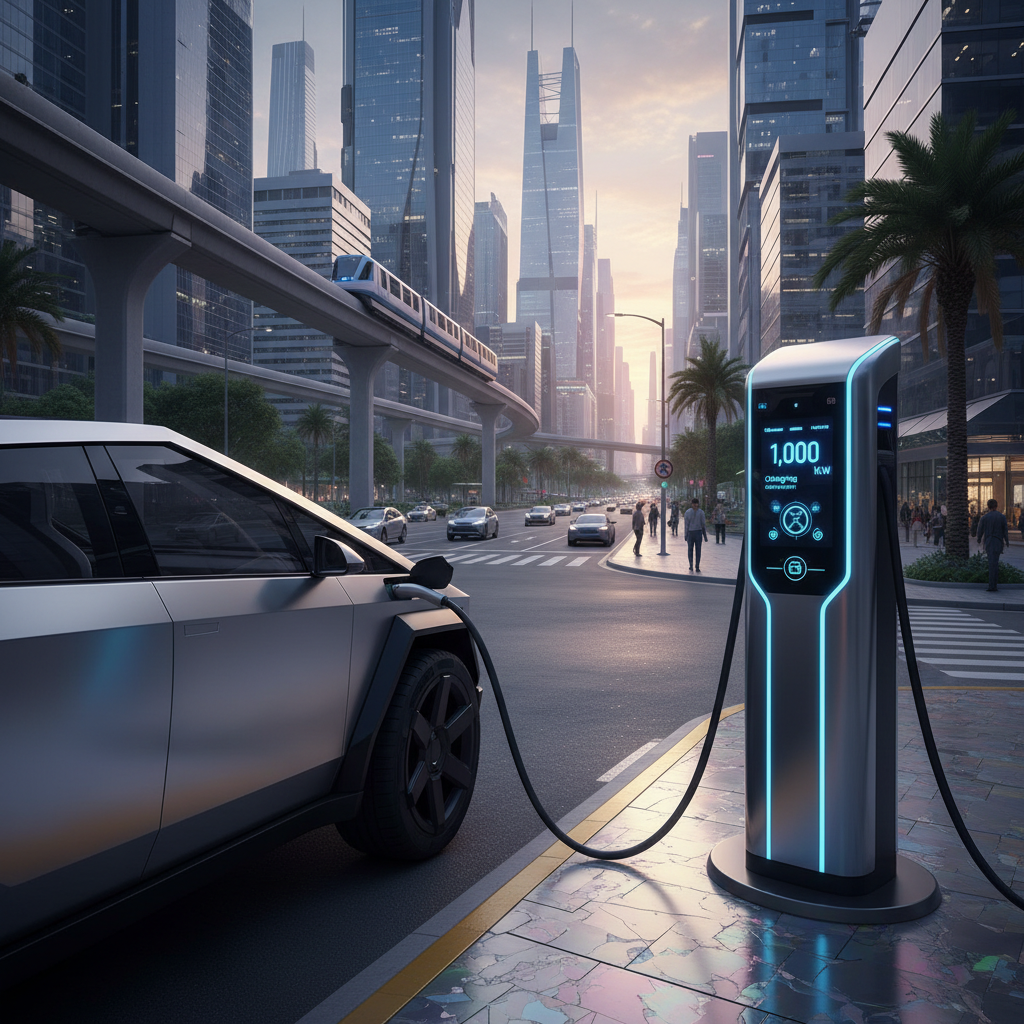
BYD, the Chinese automotive leader which recently exceeded Tesla’s EV sales figures globally, introduced its groundbreaking “super e-platform” to revolutionize electric vehicle technology. The system delivers 10C charging capabilities and 1,000 kW DC chargers which will significantly shorten EV charging times to match the speed of gasoline refueling.
BYD’s primary innovation enables vehicles to travel 249 miles (400 km) on a five-minute charge. This achievement dwarfs current industry standards: Tesla Superchargers operate at a maximum power of 250 kW while Electrify America provides chargers that reach up to 350 kW and Formula E’s fastest chargers deliver 600 kW.
Megawatt Milestone: BYD’s 1,000 kW Chargers Shatter Charging Barriers
Wang Chuanfu, the chairperson of BYD, announced the company’s strategic plan to achieve EV charging speeds that match the ease of refueling traditional gasoline vehicles. BYD’s new “super e-platform” battery technology lies at the core of this vision delivering fast charging capabilities at 10C speed. This innovative technology can fully recharge a battery in five minutes under perfect conditions which represents a major advancement in electric vehicle charging technology.
The rapid charging system operates through the inclusion of 1,000 kW DC chargers which facilitate quick energy transfer to significantly cut down the time drivers need to spend charging their vehicles. The technology targets the elimination of extended charging time, which stands as one of the major barriers to widespread EV adoption.
BYD plans to deploy more than 4,000 megawatt chargers throughout China to build a comprehensive network for its future electric vehicles. The Han L sedan and Tang L SUV stand as the initial beneficiaries of these advancements since both models push EV performance and convenience to new limits.
BYD’s technological developments help move the world toward electric transportation while they change what consumers expect from vehicles. The gap between traditional vehicles and electric vehicles is shrinking as battery charging times now match the speed of traditional fuel refueling which makes EVs increasingly attractive for drivers.
BYD maintains a growing global market presence with particular success in Europe while facing substantial political barriers to entering the US market. Congress members from both political parties have united in efforts to block the entry of Chinese EV manufacturers into the US market because of threats to national security and economic competition concerns.
Understanding the difference between range estimation standards remains vital. BYD’s 249-mile range estimation stems from the CLTC standard which provides more favorable results than the US EPA standard. Testing vehicles with EPA standards probably results in lower achievable range outputs.
Other automakers especially those with significant US operations still have the opportunity to license BYD’s technology despite existing challenges. The adoption of faster charging standards throughout the United States could advance more rapidly through licensing agreements which would help overcome political obstacles and extend rapid charging benefits to more consumers.
The 1,000 kW chargers deliver a large amount of energy to the vehicle’s battery system rapidly. Battery temperature along with state of charge and charging infrastructure quality impact real-world charging efficiency. The vehicle’s energy efficiency expressed in kilometers per kilowatt-hour affects how much range gets added during a charging session.
The “super e-platform” from BYD marks a major development in electric vehicle charging technology which could boost EV adoption by solving the vital problem of charging duration. The company strengthens its global EV market leadership through its dedication to developing a powerful charging network in China.