
- calendar_today August 21, 2025
.
President Donald Trump said Monday the United States would welcome 600,000 Chinese students to American colleges, an apparent easing of his hardline stance on China as he continues a months-long tariff battle with Beijing.
Trump announced in remarks at the White House on Monday.
The president’s decision to admit so many Chinese students to U.S. universities runs counter to other recent actions by his administration that have threatened academic collaboration between the two countries. Trump’s Department of Commerce in May began publishing weekly updates on new visa restrictions against China, where visas have already been reduced by two-thirds since last year. At the same time, Washington has implemented a tariff increase of 145 percent on all Chinese goods, while Beijing has imposed a 125 percent tariff on all U.S. exports.
The two countries have been in talks in Geneva to de-escalate, with negotiators agreeing to a pause in new tariffs last month. Trump has since suggested other new restrictions against Beijing, including a 200 percent tariff on Chinese-made magnets. “China, intelligently, went and they sort of took a monopoly on the world’s magnets,” he said. “It’ll probably take us a year to have them.”
At the time, Washington and Beijing were already embroiled in a high-profile trade war. Trump’s new threat came one day after his administration ordered steep retaliatory tariffs against Beijing in response to a Chinese announcement on tech export controls that threatened to curtail advanced chip sales to U.S. firms.
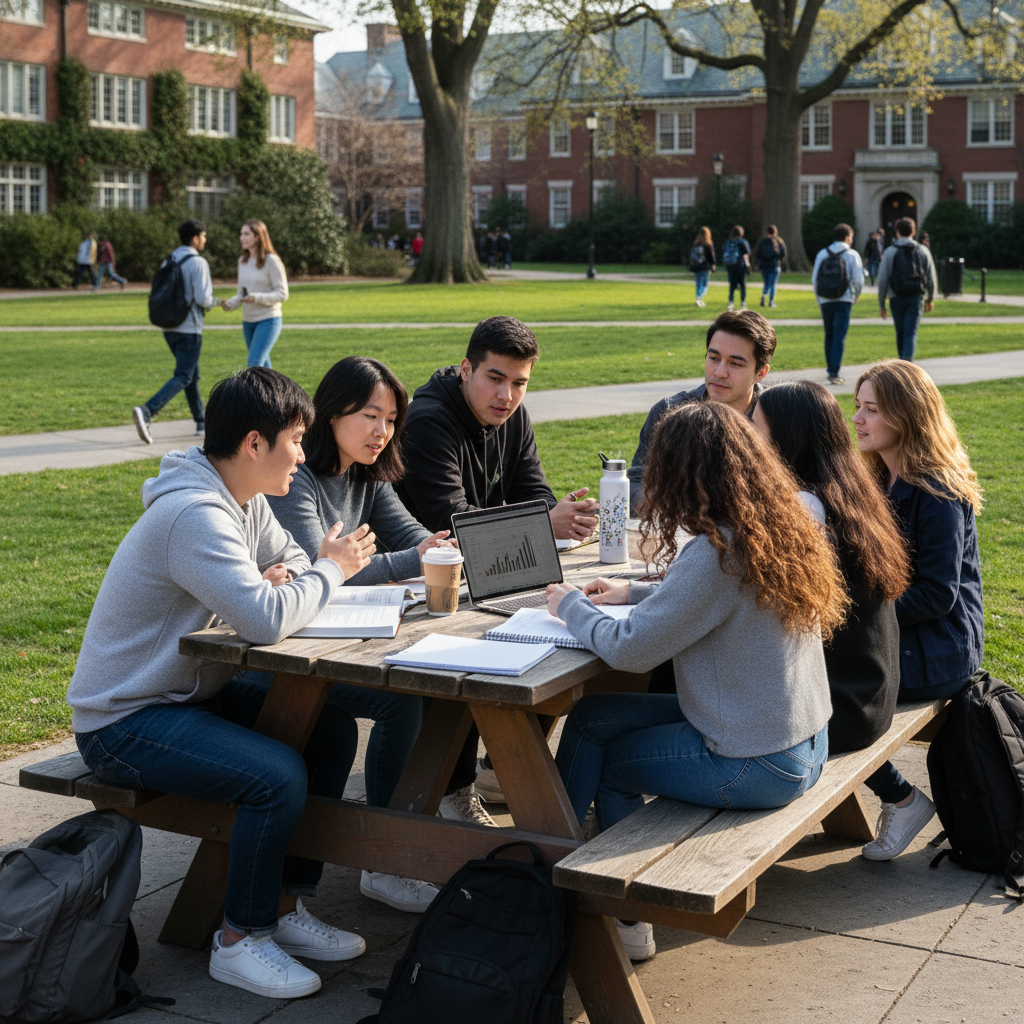
About 270,000 students from China currently attend school in the United States, but Trump said on Monday he would triple that number. 600,000 would constitute nearly a quarter of all international students in the country and would represent a significant increase in tuition revenue for American colleges, many of which have struggled to make up for lost pandemic enrollment.
The announcement was a marked departure from Trump’s previous approach to student visas for Chinese nationals. Trump’s Secretary of State Marco Rubio announced in May that his administration would “aggressively revoke” visas for Chinese students “either working for or have ties to the Chinese Communist Party,” as well as Chinese students in the fields of “cutting-edge, sensitive research fields.” At the time, Rubio’s announcement was met with warnings from the higher education community.
Trump himself soon appeared to backtrack, telling reporters in June he had “always been in favor” of allowing Chinese students to study in the United States.
The Republican president met with South Korean President Lee Jae Myung on Monday for talks, with reporters asking whether he might be willing to sit down with Chinese President Xi Jinping this year. “I would like to meet him this year,” Trump said. “There’s no reason we shouldn’t be meeting.” Trump touted the new tariffs he has placed on China as a new revenue source for the U.S. government. “We’re taking a lot of money in from China because of the tariffs and the different things,” Trump said. “It’s a very important relationship. It’s a much better relationship economically than it was before with Biden. But he allowed that. They just took him to the cleaners.”
The announcement did not appear to signal a de-escalation of tariffs, but Trump still held out the prospect of diplomatic engagement in light of new barriers to trade. The strategy of combining saber-rattling on one front with a promise of cooperation on another is a familiar one for Trump.
The top three universities in the United States for Chinese students—Stanford, MIT, and Harvard—each received more than $100 million in tuition payments from Chinese nationals in 2021. At present, Chinese nationals make up nearly half of the international student body in the U.S.
Trump’s tariff and visa decisions have sent mixed signals. While some visas have been targeted for revocation, others are being expanded—again, as the president has imposed a 145 percent tariff on all Chinese goods while simultaneously stating he has “always been in favor” of allowing Chinese students to study in the United States.
With so many factors in play, both universities and the Chinese government will be waiting to see whether Trump’s announcement this week is followed by action.