- calendar_today August 10, 2025
The ChatGPT platform now includes “Images in ChatGPT,” which integrates direct image generation capabilities as an innovative feature from OpenAI. The GPT-4o model powers this breakthrough by allowing users to generate images during their chat interactions, which represents a major advancement in AI-generated content.
Users of all ChatGPT subscription levels, including Plus, Pro, Team, and free, will receive access to “Images in ChatGPT” to ensure widespread availability of advanced image creation. OpenAI spokesperson Taya Christianson stated that free tier users experience similar DALL-E 3 usage limits of around three images per day, but these limits can change according to demand. Custom GPTs allow DALL-E enthusiasts to maintain their access.
OpenAI’s research lead Gabriel Goh explained GPT-4o’s transformative power by referring to it as an “omnimodal” base that processes various kinds of data inputs like text and images as well as audio and video. The model showcases improved “binding” capability, which solves a prevalent difficulty encountered in AI image creation. GPT-4o has achieved a reliable level of performance by managing 15 to 20 objects without mixing colors or shapes, unlike earlier AI models, which struggled with this task.
The new model stands out for its excellent text rendering capabilities. AI-produced pictures have traditionally shown significant problems with text becoming distorted or meaningless. Goh explained that the process required extensive iterative work, which took many months to perfect. Despite the ongoing challenge of perfect text rendering for tiny text elements, the team has managed to produce consistently usable text in images.
The system’s structure differs from typical image generators, which use diffusion models by implementing an autoregressive methodology. The technique, which produces images in a left-to-right and top-to-bottom sequence similar to text generation, appears to enhance text rendering and binding performance.
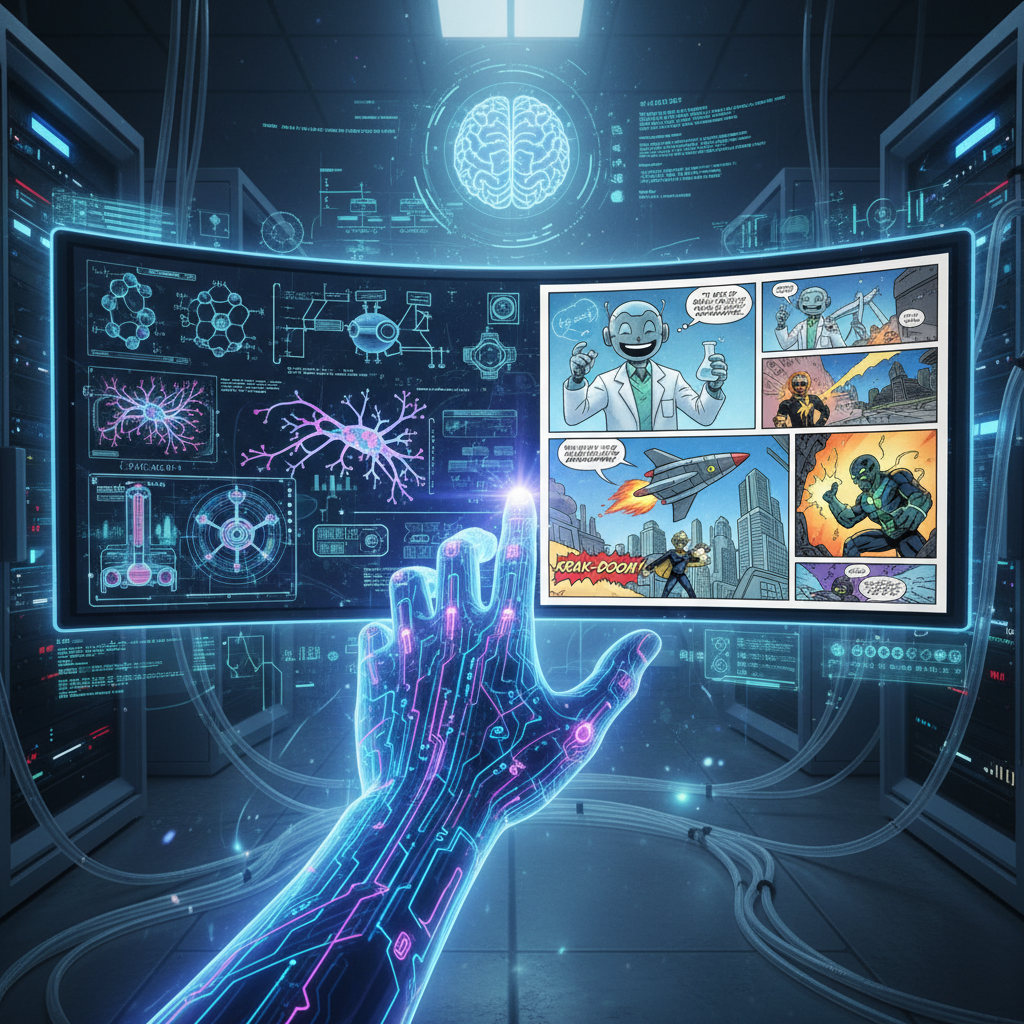
The briefing revealed OpenAI’s system capabilities, which included producing detailed scientific diagrams of Newton’s prism experiment with precise annotations, together with the creation of multi-panel comics featuring consistent characters and dialogue, and the design of informational posters containing accurate text. The demonstration included practical applications such as creating transparent background images for stickers, along with restaurant menus and logos.
Jackie Shannon, who leads ChatGPT’s multimodal products, highlighted the system’s skill in utilizing global knowledge. When I create an image, I face my personal skill limitations, but I also use all the knowledge I have gathered about the world. The model enriches image requests with world knowledge, which allows users to generate an image of Newton’s prism experiment without providing any background information.
OpenAI argues that the improved quality and abilities of image generation make the slightly increased time duration worthwhile. Shannon acknowledged the need for latency improvements yet emphasized that the image quality, together with the system’s capabilities and world knowledge, compensates for any extra wait time users experience.
Key Technological Advancements: Binding, Text Rendering, and Architectural Shifts
The GPT-4o model brings substantial technological progress, especially through its “binding” functions, which enable precise depiction of detailed scenes filled with multiple objects. The enhanced text rendering in current AI image generators emerged from extensive iterative development to solve a major limitation found in earlier models. The move towards autoregressive image generation methods, which depart from traditional diffusion models, appears to play a role in these technological improvements.
Safeguards and User Empowerment: Addressing Misuse and Ensuring Responsible AI
OpenAI emphasized its commitment to robust safeguards to address misuse concerns. The system blocks requests for CSAM material and prevents watermark removal while also stopping the creation of sexual deepfakes. While generated images will have no visual watermarks, they will always carry standard C2PA metadata to identify them as OpenAI products. The company has internal image verification tools in place.
According to Shannon, there isn’t a perfect system available for this task, but our safeguards are constantly being improved, which we consider a fundamental starting point. Users who create images with ChatGPT maintain ownership of their work and can use these images freely in accordance with our usage policies.
OpenAI’s “Images in ChatGPT” initiative upgrades its flagship product and establishes a new benchmark for powerful AI image creation while proactively managing potential technological risks.