
- calendar_today August 17, 2025
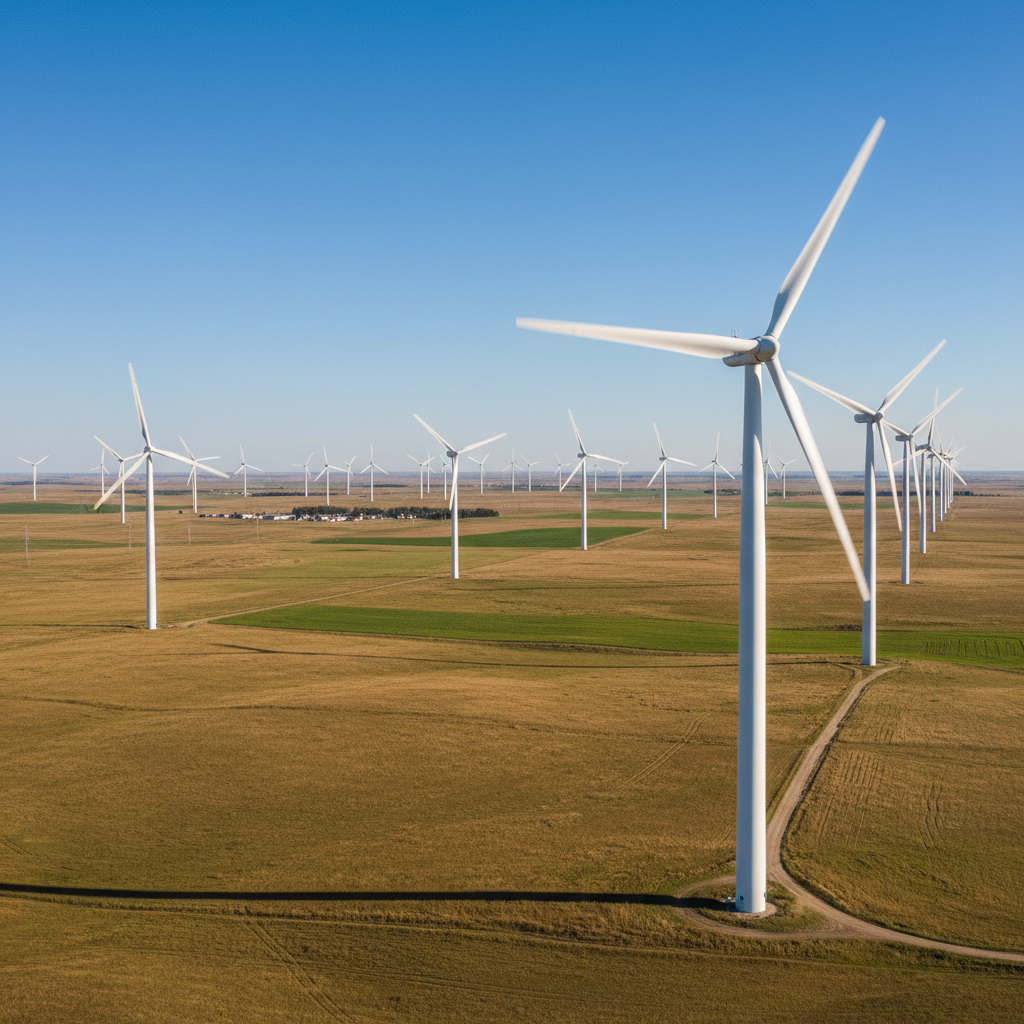
During a press conference ostensibly focused on the benefits of an EU trade deal, former U.S. President Donald Trump momentarily reverted to type. At one point, he took a veer towards a well-worn favorite: skepticism about renewable energy sources, particularly wind. Trump called wind turbines a “con job,” and added that they drive whales “loco,” kill birds, and “knock people over like a ton of bricks.”
Such comments might be seen as another meaningless political soundbite from Trump’s Twitter-fueled spectacle. But they are, in fact, the latest example of a worldwide pattern. Over the last few decades, there has been a steady stream of conspiracy theories and moral panics surrounding renewable energy sources, especially wind turbines. In the U.S., Trump has even codified the term “windmill” as a climate denier’s instant-reaction shorthand for wind turbines. Other politicians, influencers, and media personalities have said that they kill birds, are noisy, distract birds, are aliens, contain 5G mobile phone technology, use satellite images to spy on people, or drive people crazy.
These moral panics are echoes of the first such waves about renewable energy sources in the early 1980s. There are parallels to other examples of the human fear of change and novelty, such as 19th-century moral panics about telephone wires spreading venereal disease. The fear of electricity pylons harming wildlife also has some precedents in rural mythologies, such as the narrative that cellphone masts cause cancer. In other words, some anti-wind conspiracy theories express what researchers have called “technophobia.”
Climate change denial is a complex and evolving issue, and new wind farms are just one small part of the wider story of energy and emissions. But they are often the most visible symbol of clean energy in a given area. In Australia, several large onshore wind farms have been built in the past decade or so, and the country recently surpassed its renewable energy record with 52% of the electricity mix coming from zero-emissions sources in April 2021. Wind turbines are large, permanent fixtures, easily visible from large distances. They present a visual challenge to some of the fossil fuel structures that have been dominant for decades. This contrast is one reason why they get so much attention.
A Much Deeper Conspiracy Theory
But research also suggests that these deeper-seated fears and anxieties run much deeper. Once they become part of a person’s mental worldview, they are extremely hard to shift with fact-checking or reassurances about evidence. This is challenging for governments, businesses, and other institutions that need to make rapid progress in the clean energy transition.
Where do conspiracy theories about renewables come from? Climate science has been warning about the effects of rising carbon dioxide levels since at least the 1950s, and there was an expectation of profound environmental change at a relatively rapid rate. But while early pushes for renewables were made by a handful of engineers and businesses, they were largely a way to rein in the dominance of fossil fuel companies. An enduring pop-culture example of this theory is The Simpsons episode where the tycoon Mr. Burns builds a tower to blot out the sun, forcing the residents of Springfield to buy his nuclear power instead. It was a cartoon caricature, but it showed one popular theory of the time: fossil fuel interests would work to prevent renewables.
In reality, those fears were well-founded. In 2004, then–Australian Prime Minister John Howard brought a group of fossil fuel executives together under the Low Emissions Technology Advisory Group. However, the group did not want to encourage rapid decarbonization. Instead, it sought to slow the growth of renewables, to maintain the dominance of coal, oil, and gas.
Wind farms also had to overcome the obstacles of public perception. Coal mines, oil fields, and nuclear power plants are often hidden from view, away from residential areas. But wind turbines are large, highly visible, and often built on ridgelines or open plains. Their visibility has made them easy targets for critics and conspiracy theorists. For a while, a rumor called “wind turbine syndrome” spread across Europe and Australia, a “non-disease” according to medical experts, which was dismissed by wind turbine opponents. They claimed turbines would cause a variety of symptoms, including nausea, dizziness, headaches, or rashes. Academic research has also confirmed that opposition to wind farms is less dependent on age, gender, or education level and more strongly connected to belief systems. Kevin Winter and colleagues’ work, first in Germany and later replicated in surveys in the U.S., U.K., and Australia, found that conspiracy thinking was a far stronger predictor of people’s opposition to wind projects than demographics or political party membership. The study found that whether people believed that the government was exaggerating climate change, that wind farms were a way to control people, or that climate change was a hoax, they were also more likely to think wind turbines made them feel sick and to view wind farms as a danger.
Opponents to wind farms are not changed by facts. Presenting evidence that turbines are not poisoning the groundwater or causing mass blackouts is unlikely to be successful because these are people who are not responding to misinformation, but to a worldview. In the words of Winter and colleagues, opposition is “rooted in people’s worldviews.”