
- calendar_today August 14, 2025
Colorado’s real estate market in 2025 is adapting to a new equilibrium. With interest rates stabilizing and demand patterns shifting, investors across the state—from the Front Range to resort towns—are reassessing where and how to allocate capital. The focus has shifted from short-term flips to long-term stability, income generation, and geographic alignment with population growth.
Which sectors are drawing the most attention this year? Across Denver, Boulder, Fort Collins, Colorado Springs, and even Western Slope cities, seven real estate asset classes are proving resilient. These sectors are not only staying afloat—they’re adjusting to Colorado’s unique mix of outdoor lifestyle, tech growth, and inter-state migration.
Multifamily Housing: The Reliable Performer
Colorado’s rental market remains robust, especially in Denver, Colorado Springs, and Fort Collins. High mortgage rates and tight housing supply have pushed many residents—especially younger workers and transplants—into long-term renting. Class B and C apartment buildings are in high demand, particularly in neighborhoods with strong transit access and walkability.
Vacancy rates in cities like Aurora and Greeley hover around 5%, while steady rent growth continues in mid-rise developments and build-to-rent communities. These assets appeal to investors for their consistent cash flow and manageable operational costs. Upgrades to existing units and solid property management still yield 3–4% annual rent increases in most urban areas.
Industrial Properties: Still a Growth Engine
Colorado’s strategic location and growing logistics network are driving demand for industrial real estate. From warehouse parks in Aurora and Commerce City to flex-industrial space in Colorado Springs, vacancy rates remain low while rental rates rise steadily.
According to CBRE’s 2025 regional report, Denver’s industrial sector posted a 6.9% year-over-year rent gain, with sub-4% vacancy in last-mile logistics and light manufacturing corridors. Cold storage, fulfillment centers, and cannabis-related facilities are also seeing significant capital inflow. With continued expansion of e-commerce and food distribution, Colorado’s industrial footprint is likely to expand deeper into the I-25 and I-70 corridors.
Single-Family Rentals in Suburban Markets
Colorado’s suburban regions are seeing a notable rise in single-family rental (SFR) demand. Cities like Castle Rock, Loveland, and Windsor are attracting working families priced out of homeownership. These renters are looking for space, strong school districts, and proximity to outdoor amenities—all without the commitment of buying in a high-interest-rate environment.
Roofstock’s 2025 Investor Sentiment Index highlights Colorado as a key SFR growth state, with low vacancy and solid tenant retention rates in suburban markets. Investors favor these properties for their long-term appreciation, stable occupancy, and relatively low maintenance costs per unit.
Migration Patterns: Front Range Dominance
The Front Range—from Fort Collins to Pueblo—continues to be the population and economic engine of Colorado. Migration from California, Texas, and the Midwest has kept housing demand elevated, especially near job centers, universities, and military bases.
While mountain towns like Aspen and Telluride remain premium-priced and tourism-driven, smaller communities like Grand Junction and Montrose are gaining attention for their affordability and livability. Developers are targeting these secondary cities with mixed-use and residential projects designed to meet growing demand from retirees, remote workers, and young families alike.
Mixed-Use Developments & Downtown Revival
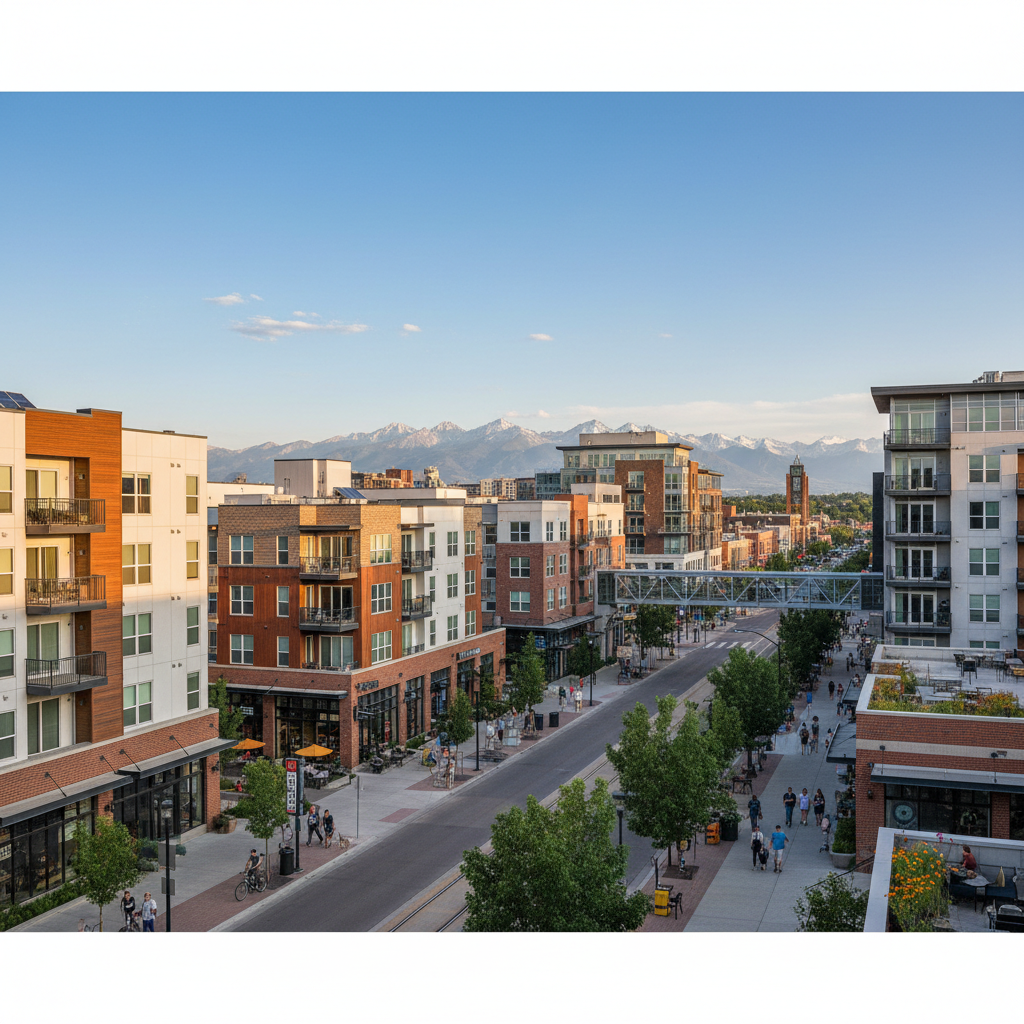
Urban centers across Colorado are undergoing revitalization through mixed-use developments. In Denver, neighborhoods like RiNo, Capitol Hill, and Sun Valley are seeing projects that blend housing, retail, coworking, and leisure amenities. In Boulder and Fort Collins, smaller-scale mixed-use hubs are emerging near university districts and transit lines.
These projects, though often complex due to zoning and permitting, are finding eager tenants—especially among younger professionals seeking car-optional lifestyles. Longmont and Colorado Springs are also investing in pedestrian-friendly downtowns that prioritize density and convenience, opening new opportunities for developers willing to navigate municipal hurdles.
Niche Assets on the Rise: Senior & Student Housing
Colorado’s aging population and large student base are fueling two niche markets: senior living and student housing. In places like Boulder, Colorado Springs, and Fort Collins, the student housing market is strong, with pre-leasing rates above 90% and growing demand for furnished, tech-equipped units near campus.
Senior housing is expanding statewide, with particular growth in Colorado Springs, Loveland, and Grand Junction. Memory care, assisted living, and active adult communities are being built to serve the growing 65+ demographic. Developers targeting wellness-focused, community-integrated designs are seeing strong early lease-ups and long-term demand.
Risk Factors and Investment Cautions
Colorado’s real estate landscape, while promising, comes with unique risks. Wildfire zones in areas like Boulder County and the Western Slope are pushing up insurance premiums and requiring extensive mitigation strategies. Additionally, water access and infrastructure constraints could impact development costs in mountain and desert communities.
On the regulatory front, cities like Denver and Boulder have introduced tighter rules on short-term rentals and affordable housing mandates. These policies can impact ROI if not properly accounted for. Interest rates, though no longer spiking, remain above historic lows, requiring more conservative underwriting and contingency planning.
Expert Insight: What the Analysts Say
“Colorado’s market remains attractive, especially along the Front Range, where population growth and tech expansion continue,” says Lauren Bellingham, senior economist with CBRE. “But the investors seeing the strongest returns are the ones who understand the micro-dynamics of each submarket—from zoning in Boulder to migration trends in Pueblo.”
Redfin’s 2025 Housing Trends report highlights employment growth, migration, and quality-of-life preferences as the top drivers for real estate in Colorado. Analysts agree: the key is interpreting this data regionally and acting accordingly.
Strategic Diversification is Key in 2025
Colorado’s strongest investors in 2025 are taking a diversified approach—balancing urban and suburban, core and niche. Multifamily remains a reliable pillar, while industrial property in logistics corridors continues to shine. Suburban single-family rentals are gaining favor among working families, and mixed-use projects are transforming both large and mid-sized downtowns.
Niche markets like student and senior housing are growing fast and filling long-term needs. Meanwhile, understanding the risks—climate, insurance, regulatory—ensures smarter, more durable investment strategies.
For those investing with insight, patience, and an understanding of Colorado’s diverse regions, the opportunities in 2025 remain both wide and deep.