
- calendar_today August 13, 2025
Colorado’s commercial real estate (CRE) market is undergoing a strategic transformation in 2025. Known for its scenic beauty, tech-forward workforce, and a diversified economy, the Centennial State is showing resilience and adaptability amid national CRE uncertainties. As investors nationwide seek stable returns in post-pandemic environments, Colorado stands out with balanced demand across industrial, multifamily, and even select office and retail sectors.
With major metros like Denver, Boulder, Fort Collins, and Colorado Springs offering unique opportunities, Colorado’s CRE outlook in 2025 is both nuanced and promising.
Population Growth and Urban Appeal
Colorado continues to attract new residents, particularly from California, Texas, and Illinois, drawn by the state’s quality of life, recreational access, and expanding job markets. According to the Colorado State Demography Office, the population grew by nearly 1.2% in 2024, with Denver and its surrounding suburbs absorbing the largest share.
This steady migration supports demand across multiple CRE verticals. In 2025, suburban expansion in places like Thornton, Parker, and Castle Rock is creating new retail corridors, distribution hubs, and multifamily construction zones.
Industrial Real Estate: Riding the Front Range Boom
Colorado’s industrial sector is one of the top-performing CRE categories in 2025. The I-25 corridor from Denver to Colorado Springs has become a logistics and distribution hotspot, benefiting from its central location in the U.S. and proximity to major interstates.
According to CBRE, the Denver industrial market absorbed over 8.5 million square feet of space in 2024, and nearly 7 million square feet remain under construction in early 2025. Demand is being driven by e-commerce growth, regional distribution expansion, and clean-tech manufacturing.
Aurora and Commerce City are seeing a surge in fulfillment centers and flex industrial parks. Southern Colorado, particularly around Pueblo, is gaining attention for its affordability and rail connectivity, appealing to manufacturers and suppliers expanding westward.
Multifamily: Still a Safe Bet in a Shifting Market
Colorado’s multifamily sector remains strong, although construction has slowed slightly due to rising borrowing costs. Nevertheless, rent growth continues in high-demand areas. Denver, Boulder, and Fort Collins maintain occupancy rates above 94%, and build-to-rent (BTR) communities are gaining traction in suburban zones.
The biggest action is around transit-oriented developments (TODs) in metro Denver. Projects near RTD rail stations in Lakewood, Englewood, and Westminster are offering investors long-term stability with reduced car dependency—a selling point for eco-conscious tenants.
Colorado Springs, in particular, is drawing young professionals and remote workers who want proximity to Denver without the price tag. As a result, apartment construction in the city is at its highest point in a decade.
Office Market: Hybrid Recovery in Motion
Colorado’s office market is showing selective recovery, particularly in submarkets catering to flexible, hybrid-friendly layouts. Downtown Denver is still grappling with higher vacancy (hovering around 24%), but suburban office parks and tech campuses in Boulder, Broomfield, and the Denver Tech Center are seeing leasing momentum.
In 2025, there’s a visible shift toward smaller office footprints with collaborative workspaces and wellness-focused amenities. Life sciences and aerospace firms are key drivers of demand, especially near the University of Colorado and the Fitzsimons Innovation Community in Aurora.
Adaptive reuse projects are also gaining ground. Older Class B office buildings are being converted into lab space, co-working hubs, and even residential units—offering creative solutions to lingering vacancy.
Retail Real Estate: Lifestyle Over Legacy
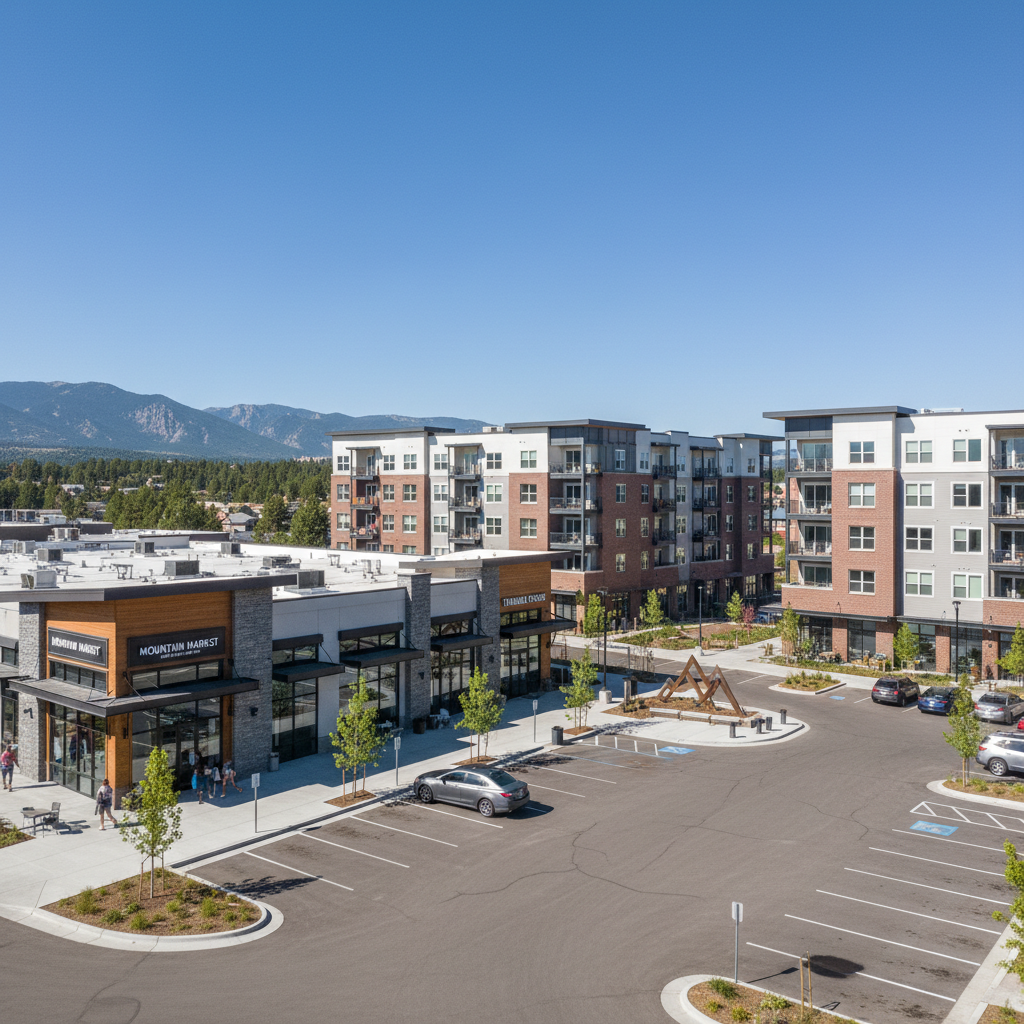
Retail in Colorado has transitioned from traditional big-box formats to more experiential, community-driven concepts. In 2025, open-air centers, mixed-use nodes, and destination retail are outperforming legacy malls.
According to Marcus & Millichap, retail vacancy in metro Denver dropped to 4.9% in early 2025. Neighborhood retail anchored by grocery stores and wellness tenants—like gyms, clinics, and pet care—continues to thrive.
Downtown Boulder and Fort Collins are capitalizing on pedestrian-friendly retail strips with strong foot traffic from students, tourists, and locals alike. Meanwhile, tourism-centric towns like Aspen, Vail, and Estes Park are seeing robust demand for boutique retail and upscale dining.
Hospitality and Tourism Fuel New Development
Tourism remains a vital pillar for Colorado’s CRE recovery, especially in resort towns and gateway cities. In 2025, hotel occupancy across the state averages around 68%, boosted by year-round attractions like skiing, hiking, and festivals.
Short-term rental demand has surged in smaller towns such as Glenwood Springs, Salida, and Durango, encouraging the development of boutique hotels and hybrid lodging formats.
Denver International Airport’s continued expansion is helping support hospitality development on the city’s eastern outskirts, including extended-stay and business-focused hotels near airport corridors.
Infrastructure Investment Supports Expansion
Colorado is leveraging billions in federal infrastructure funding to boost commercial expansion. The state is investing heavily in public transit, highway improvements, and broadband expansion through funds from the Infrastructure Investment and Jobs Act (IIJA).
The Front Range Passenger Rail project, still in planning phases, could eventually connect Pueblo to Fort Collins with stops in key metros—redefining real estate values along the corridor. In the meantime, CDOT’s improvements to I-70 and I-25 are streamlining goods movement and unlocking new CRE development zones.
In addition, local municipalities are offering tax incentives, green building credits, and opportunity zone advantages that make Colorado increasingly attractive to national and international investors.
Environmental Awareness and Climate-Ready Design
Colorado’s CRE growth is deeply tied to environmental stewardship. From wildfires to water conservation, developers are adjusting to climate realities through resilient design, sustainable materials, and LEED-certified construction.
Green building requirements in Boulder, Denver, and Aspen are among the strictest in the nation, pushing developers to innovate in energy efficiency, low-emission transit access, and renewable integration.
New industrial parks in Colorado Springs and Aurora are incorporating solar rooftops, greywater recycling, and electric vehicle infrastructure from the start—attracting ESG-conscious tenants and investors.
Outlook: Colorado’s Competitive CRE Edge in 2025
In a year where national markets are still recalibrating, Colorado is demonstrating that a diverse economy, forward-thinking planning, and strong regional identity can create long-term real estate value. While challenges like rising costs and environmental risks remain, the state’s fundamentals are sound.
From suburban flex spaces to mountain-town hospitality, Colorado’s commercial real estate market is evolving—not retreating. Investors willing to adapt alongside it will find the Centennial State well-positioned for sustained growth in 2025 and beyond.