- calendar_today August 10, 2025
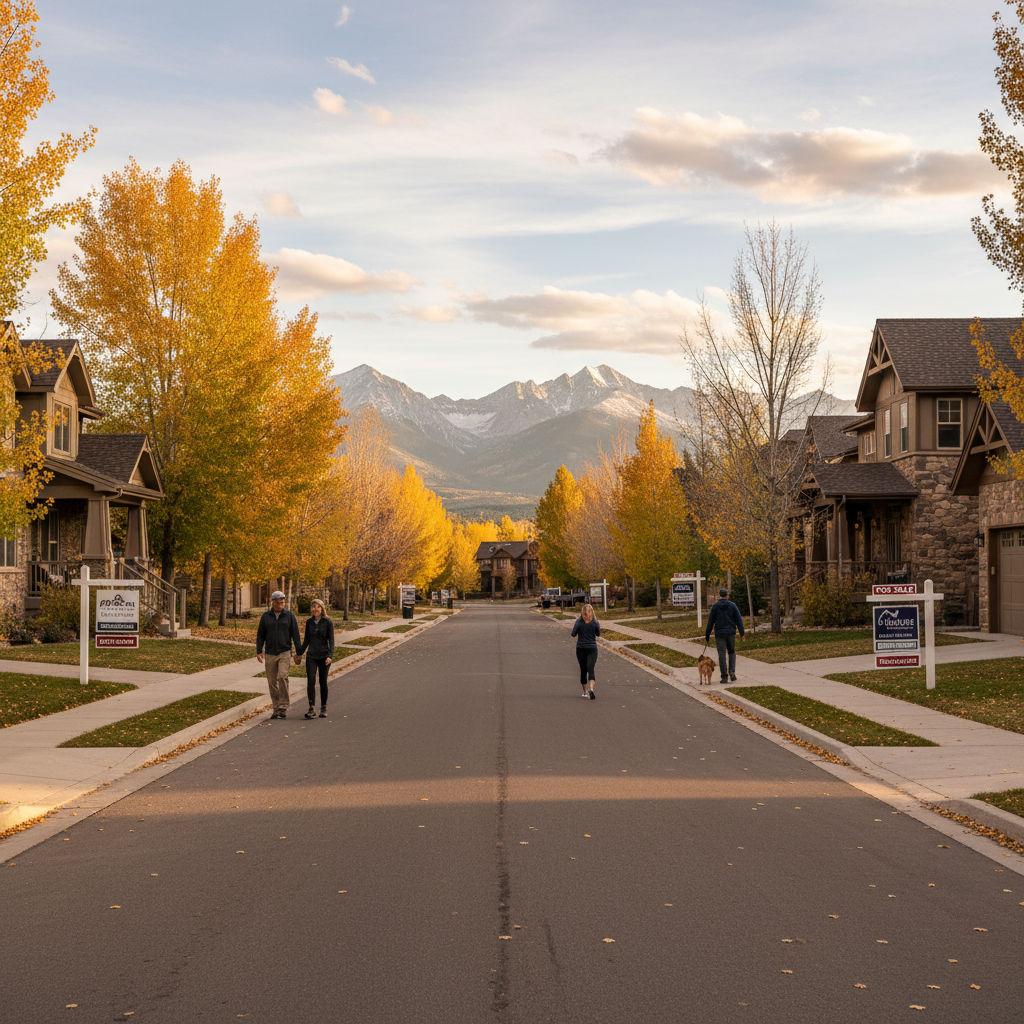
Colorado’s housing market in 2025 feels like it’s hit a wall. After years of rapid appreciation, population growth, and urban migration, the state is now witnessing a dramatic slowdown in both listings and buyer activity.
This isn’t a traditional housing downturn marked by crashing home values or widespread foreclosures. Instead, Colorado’s market has effectively frozen, with would-be sellers clinging to low-interest mortgages and new buyers priced out by high borrowing costs and steep home prices.
Below are five revealing statistics that shed light on Colorado’s real estate standstill and what it means for homebuyers in the Centennial State this year.
1. Mortgage Rates Remain Above 6.8%
Mortgage rates continue to be one of the most stubborn barriers in Colorado’s housing landscape. As of July 2025, the average 30-year fixed mortgage rate sits at 6.91%, according to Freddie Mac—near its 2023 peak and nearly double the pre-pandemic average.
The Federal Reserve, despite progress on inflation, has kept rates elevated to ensure long-term price stability. As a result, Colorado homeowners who refinanced at 3% or lower during the pandemic are reluctant to give up those rates.
Roughly 63% of Colorado homeowners have mortgages under 4%, making a move financially unappealing.
“There’s no incentive for existing homeowners to move,” said Nadia Evangelou, senior economist at the National Association of Realtors (NAR). “They’re locked in by rates and sitting tight.”
2. Inventory Levels Drop 22% Year-Over-Year
The rate lock-in effect has led to a steep drop in home listings across Colorado. According to Realtor.com’s June 2025 Housing Report, active listings statewide are down 22% compared to the same time in 2024.
Metro Denver has been especially impacted, with inventory down nearly 30% year-over-year. Boulder, Fort Collins, and Colorado Springs are also seeing double-digit declines in available homes.
At the same time, homebuilders are pulling back, citing slowing buyer demand and high costs for labor and materials.
“We’re essentially in a supply drought,” said Danielle Hale, Chief Economist at Realtor.com. “This shortage is what’s keeping prices elevated and competition fierce even in a high-rate environment.”
3. Home Prices Stay High: $419,000 National Median
Despite reduced sales activity, Colorado home prices remain high. The Redfin Q2 2025 Market Report pegs the national median home price at $419,000—up 2.7% from last year. In Colorado, prices in many markets exceed that figure by a wide margin.
The Denver metro area continues to post median prices above $570,000, while Boulder remains one of the most expensive housing markets in the interior U.S., with prices often exceeding $750,000. Even mid-size cities like Loveland and Grand Junction have seen modest price growth amid low supply.
“We’re seeing demand recalibrate, but not collapse,” said Glenn Kelman, CEO of Redfin. “With so little inventory, prices just aren’t falling the way you’d expect.”
4. First-Time Buyers Are Being Pushed Out
Affordability challenges are hitting first-time buyers in Colorado especially hard. The NAR’s 2025 Homebuyer Profile reports that just 26% of recent home purchases nationwide involved first-time buyers—already a decade low.
In Colorado, that number may be even lower, particularly in cities like Denver and Boulder, where home prices are well above national averages.
Key barriers include:
- Elevated mortgage rates pushing monthly payments beyond reach
- Home prices that exceed $500,000 in most urban markets
- Student loan debt, rent inflation, and stagnant wage growth
- Average down payments now surpassing $80,000 in many counties
“We’ve essentially priced out an entire generation of buyers,” said Mark Fleming, Chief Economist at First American Financial Corp. “The entry point into homeownership has never been higher.”
Many new buyers are now looking toward smaller, more affordable cities like Pueblo, Greeley, or even crossing state lines into Wyoming or Nebraska in search of better value.
5. Homebuilders Slow Production Amid Cost Pressures
Colorado’s homebuilding sector, once booming during the early 2020s, is now cooling off. According to the U.S. Census Bureau, single-family building permits in Colorado fell 12% in the first half of 2025 compared to a year earlier.
Builders cite several challenges:
- Higher mortgage rates reducing buyer interest
- Persistently high labor and materials costs, especially in mountain regions
- Delays in zoning approvals and land use restrictions, particularly along the Front Range
Many developers are shifting focus to rental properties or multifamily housing, particularly in high-demand areas like Denver and Colorado Springs, where the rental market remains strong.
But the retreat from single-family construction is worsening the inventory shortage and contributing to the statewide freeze.
What Experts Are Saying About 2025’s Frozen Market
Colorado’s 2025 housing market freeze is unlike past downturns. There’s no foreclosure crisis or price collapse. Instead, the market is locked in place as homeowners stay put and buyers struggle to get in.
“It’s a psychological and financial gridlock,” said Ivy Zelman, CEO of Zelman & Associates. “People aren’t buying because they can’t afford it, and people aren’t selling because they don’t want to lose what they already have.”
Some analysts believe that if mortgage rates dip below 6%, it could thaw some of the freeze. Others say broader economic and regulatory reforms—like increased housing density or first-time buyer assistance—are needed to get Colorado’s market moving again.
What Buyers Should Watch in Late 2025
For prospective homebuyers in Colorado, the back half of 2025 may offer some relief or at least signals of change. Watch for:
- Federal Reserve moves to cut interest rates
- Life events (job relocation, divorce) forcing more listings
- Local price corrections in overbuilt exurban communities
- State-backed homeownership programs, especially in rural areas
Experts advise staying financially prepared, working with local lenders, and targeting late fall for potential buying opportunities.
A Market in Pause, Not Collapse
Colorado’s housing market in 2025 isn’t crashing—it’s stuck. With high rates, low supply, and record-setting prices, buyers are effectively locked out, and sellers are staying put.
Until mortgage rates ease or inventory improves significantly, the freeze could continue well into 2026. For now, strategic planning, flexibility, and patience are essential for Coloradans hoping to find a foothold in today’s challenging housing market.